
If you're reading this, there's a good chance you're wondering the same thing thousands of people search for every single day:
Why does this hurt so much?
Not just emotionally heavy — physically painful. A tightness in your chest. A hollow feeling in your stomach. Trouble sleeping, trouble eating, trouble focusing on anything except the person who's no longer in your life.
If that's where you are right now, here's the first thing I want you to know:
You're not overreacting. And you're not weak.
YOUR BRAIN TREATS HEARTBREAK LIKE A REAL INJURY
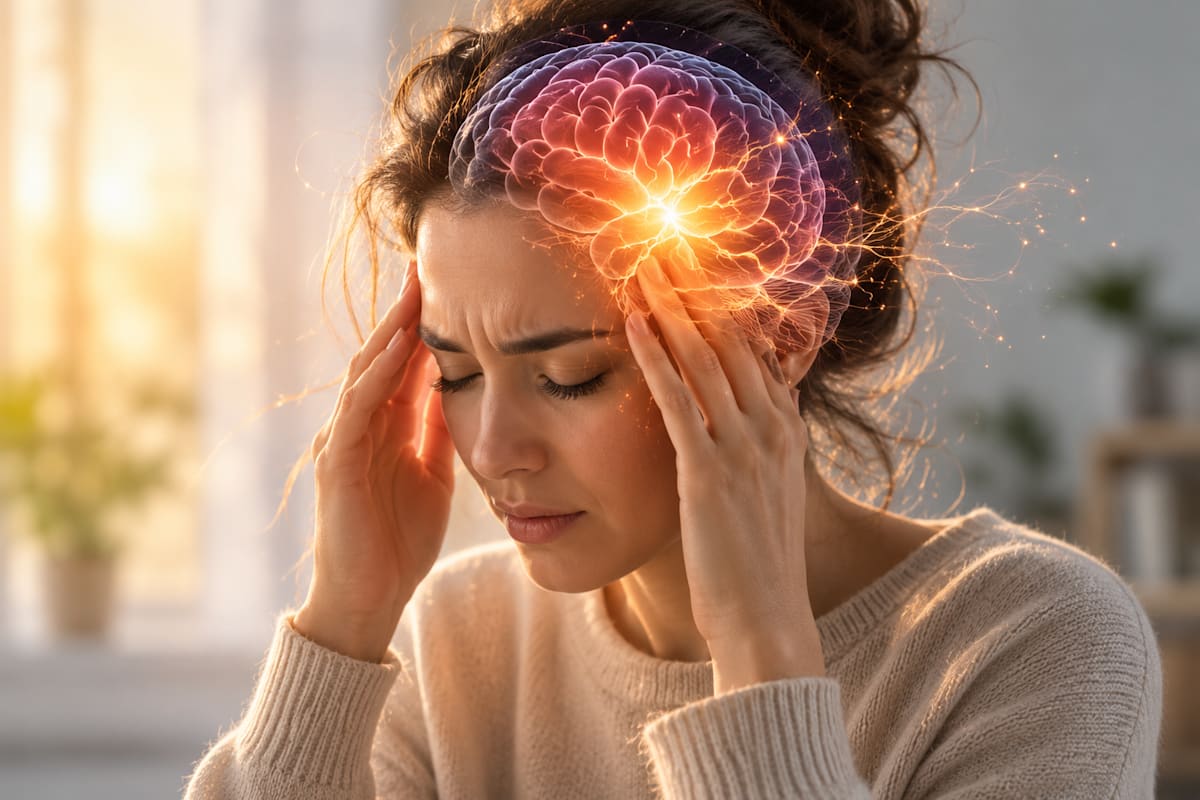
This isn't just a comforting phrase — it's backed by research. Studies using brain imaging have found that romantic rejection activates the same neural pathways as physical pain. When you look at a photo of your ex, or replay the breakup in your mind, your brain responds the way it would to an actual wound.
That's why "heartbreak" isn't just a metaphor. Your nervous system doesn't fully distinguish between losing someone you love and experiencing physical harm. Both register as a threat. Both trigger your body's alarm system.
This is also why breakups can feel disorienting in ways that surprise people — racing thoughts, disrupted sleep, loss of appetite, even physical exhaustion. Your body isn't malfunctioning. It's responding exactly as it's designed to when it senses a major loss.
----------------------------------------------------------------
IS IT NORMAL TO STILL LOVE YOUR EX?
Yes. Completely.
One of the most common questions people ask after a breakup is whether it's "normal" to still have feelings for someone who hurt them, or someone they chose to leave. The answer is almost always yes — and here's why.
Attachment doesn't disappear the moment a relationship ends. The bond you built took time, shared experiences, routines, and emotional investment to form. Your brain doesn't "delete" that the instant the relationship is over. It takes time for those neural patterns to fade — which is part of why healing isn't instant, no matter how much you might want it to be.
Still loving someone, missing them, or wishing things were different doesn't mean you made the wrong decision, or that you're not healing "correctly." It means you're human, and you loved someone. That's not a flaw to fix — it's something to be gentle with.

WHY THIS PAIN FEELS LIKE LOSING A PART OF YOURSELF
There's another layer to this that doesn't get talked about enough: when a relationship ends, you're not just losing a person. You're often losing:
• A sense of identity — who you were "as a couple"
• Daily routines and rhythms that gave your life structure
• Plans and imagined futures you had been building toward
• A support system that may have included their friends or family
• A version of yourself that felt safe, known, and secure
That's a lot of loss happening at once. No wonder it feels overwhelming. You're not just grieving a relationship — you're grieving an entire structure your life was built around.
This is exactly why "just get over it" advice rings so hollow. You're not just letting go of one thing. You're rebuilding multiple foundations simultaneously — and that takes real time.
----------------------------------------------------------------
SO WHAT DO YOU ACTUALLY DO WITH THIS PAIN?
Understanding why something hurts doesn't make the hurt disappear — but it does change your relationship to it. When you know the pain you're feeling is a normal, expected, even biologically predictable response, it becomes easier to stop fighting it and start working with it.
Here's where to begin:
1. Stop judging your pain. Whatever you're feeling right now — sadness, anger, relief, confusion, all of it at once — is valid. There's no "correct" way to feel after a breakup.
2. Let your body catch up. Sleep when you can. Eat, even if you're not hungry. Move your body gently. Your nervous system needs care right now, not criticism.
3. Give yourself permission to still care. You don't have to stop loving someone instantly to be healing in the right direction. Healing and lingering feelings can coexist.
4. Recognize this as the beginning, not the whole story. The intensity you're feeling right now is not permanent. It's the first stage of a process — one that leads somewhere better, even if you can't see that yet.
YOU'RE NOT STUCK. YOU'RE AT THE BEGINNING.
If you've been wondering why this hurts so much, or whether it's normal to still feel the way you do — I hope this gave you some clarity, and some relief.
This pain is real. It's also temporary. And understanding it is the first step toward moving through it — not around it, not by pretending it isn't there, but by working with your mind and body instead of against them.
That's exactly what we work through, step by step, in How to Be Confident After a Breakup — from the rawest early days to rebuilding genuine, lasting confidence.
You aren't broken. You're just rebuilding.

Frequently Asked Questions (FAQ)
Why does a breakup hurt so much physically?
Because your brain doesn't fully distinguish between emotional pain
and physical pain. Brain imaging studies have found that romantic
rejection activates the same neural pathways as physical injury —
which is why heartbreak can produce real physical symptoms: chest
tightness, nausea, disrupted sleep, loss of appetite, and physical
exhaustion. Your body isn't overreacting. It's responding exactly as
it's designed to when it perceives a significant loss or threat.
How long does the physical pain of a breakup last?
The acute physical symptoms — chest tightness, sleep disruption,
inability to eat — typically ease within the first few weeks as your
nervous system begins to adjust to the new reality. The deeper
emotional processing takes longer, usually 3–6 months for the
intensity to significantly decrease. What helps most in the early
stage is basic physiological care: sleep, gentle movement, and eating
regularly — not because they "fix" grief, but because they give your
nervous system the resources it needs to process what's happening.
Is it normal to still love someone after a breakup?
Yes — completely. Attachment doesn't disappear the moment a
relationship ends. The bond you built took time, shared experience,
and emotional investment to form, and your brain doesn't simply
delete it when the relationship is over. Still loving someone — even
someone who hurt you, or someone you chose to leave — doesn't mean
you made the wrong decision. It means you're human, and you loved
someone. The two things can coexist.
Why does heartbreak feel like grief?
Because it is grief. When a relationship ends, you're not just losing
a person — you're losing a daily structure, shared routines, an
imagined future, a support system, and often a version of yourself
that existed inside the relationship. That's multiple losses happening
simultaneously. Psychologists recognize breakup grief as a genuine
form of loss that follows similar emotional patterns to other types
of grief — which is exactly why "just get over it" advice misses the
mark so badly.
Why can't I stop thinking about my ex even though I know it's over?
Because your brain wired your ex into its daily neural patterns —
through shared routines, habits, emotional associations, and repeated
contact. When the relationship ends, those patterns don't disappear
automatically. Your brain essentially keeps looking for the reward
that used to be there. This is similar to the mechanism behind habit
loops — the cue is still present (the empty Saturday morning, the
quiet evening) but the routine and reward have been removed. It takes
time and deliberate redirection for those neural patterns to fade.
Does the pain of a breakup ever fully go away?
Yes. The intensity you're feeling right now is not your permanent
state — it's the beginning of a process. Research consistently shows
that most people experience significant reduction in breakup-related
emotional pain within 3–6 months, with many reporting feeling
genuinely better — not just "over it" — within a year. The key
variable isn't time alone, but what you do with it: staying socially
connected, allowing grief rather than suppressing it, and taking
small, deliberate steps toward rebuilding tend to accelerate healing
significantly.
Why does breakup pain feel worse at night?
Because during the day, external tasks and interactions keep your
attention partially occupied — even if the pain is still there. At
night, when those distractions disappear and your environment gets
quiet, your brain defaults to processing unresolved emotional
material. This is normal and actually part of how grief integrates
— your mind is doing work while you're still. The practical response
isn't to fight it, but to give your nervous system something to
anchor to: a consistent sleep routine, a brief grounding exercise
before bed, or a short journal entry to externalize what's circling
internally.
Is it normal to feel relieved and heartbroken at the same time?
Yes — and this combination is more common than most people admit.
Grief and relief aren't mutually exclusive. Many people feel genuine
sadness about the loss of the relationship alongside a quiet sense
of relief — about the ending of conflict, the freedom to make
different choices, or simply the end of uncertainty. Both feelings
are real and valid. Feeling relieved doesn't mean you didn't love
them. It means you're human, and that the relationship had both
genuine value and genuine cost.
Why can't I stop thinking about my ex
----------------------------------------------------------------
CONTINUE READING ON THIS BLOG:
----------------------------------------------------------------
• Does the No Contact Rule Really Work After a Breakup?
→ https://jackcatorbooks.com/blog/does-the-no-contact-rule-really-work-after-a-breakup
• Should You Stay Friends With Your Ex? The Honest Answer
→ https://jackcatorbooks.com/blog/should-you-stay-friends-with-your-ex-the-honest-answer
• How to Stop Obsessing Over Your Ex and Finally Move On
→ https://jackcatorbooks.com/blog/how-to-stop-obsessing-over-your-ex-and-finally-move-on
• 10 Signs You're Finally Moving On After a Breakup
→ https://jackcatorbooks.com/blog/10-signs-you-re-finally-moving-on-after-a-breakup-expert-insights-on
• How to Heal After a Breakup: A Step-by-Step Guide
----------------------------------------------------------------
START REBUILDING TODAY — FREE
If you've been feeling like you lost yourself in this relationship, the Breakup Recovery Starter Kit has a path built specifically for this.
The long-term relationship track walks you through identity reconstruction — including a guided Identity Statement exercise to help you define who you're becoming, not just who you were.
📥 Get the free Breakup Recovery Starter Kit (7-day plan, identity work, no-contact tracker) → jackcatorbooks.com
🎧 Want to go deeper? The audiobook "How to Be Confident After a Breakup" picks up right where the kit leaves off — like a close friend walking you from surviving to thriving.
👉 Listen to the free sample (4.8★) → 🎧 Listen to it: Audible
Like this post? Join 5,000+ readers who get weekly insights on love, loss, and real healing. 👉 Subscribe for free via email