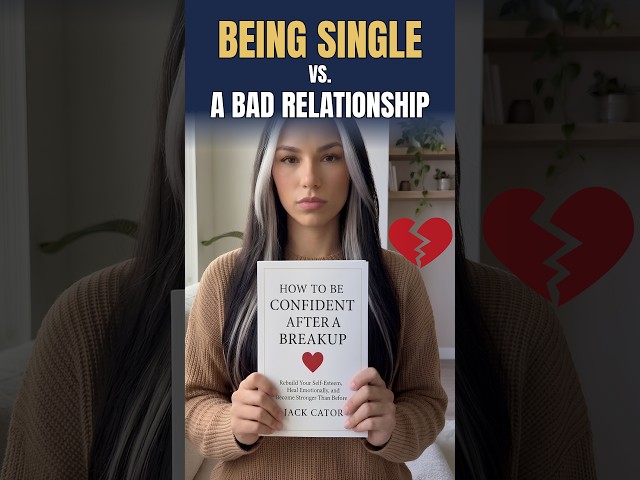
Just broke up? Here's what to do in the first days after a breakup — a simple 5-step plan to steady your emotions and start healing.
The relationship is over. Maybe you ended it. Maybe they did. Maybe it was mutual, or maybe it blindsided you completely.
Whatever the story, right now everything feels loud and empty at the same time. Your hands don't know what to do. Your mind is running loops. And somewhere in the noise, one question keeps surfacing:

What am I supposed to do now?
That's exactly what this post answers — not with platitudes, but with a real, practical system for the days immediately following a breakup.
Important: Breakup grief is neurologically real. Research shows the brain processes romantic rejection through the same pathways as physical pain. What you're feeling isn't weakness — it's biology. And biology responds to systems.
----------------------------------------------------------------
STEP 1: STABILIZE BEFORE YOU STRATEGIZE
----------------------------------------------------------------
In the first 24–72 hours, your job is not to figure out what went wrong, whether you made a mistake, or whether there's any chance of getting back together. Your only job is to stabilize.
1. Don't make major decisions. Don't send the long message. Don't post on social media. Don't reach out "just to check in." Give yourself 48 hours before you do anything you can't undo.
2. Eat. Sleep. Move. Basic physiology is the foundation. Even a short walk changes your neurochemistry. Even one real meal makes the next hour more manageable.
3. Call one person who genuinely listens. Not someone who will fuel the fire — someone who makes you feel steadier just by being present.
----------------------------------------------------------------
----------------------------------------------------------------
STEP 2: SET YOUR RECOVERY RULES IMMEDIATELY
The biggest mistake people make in the days after a breakup is leaving decisions open. When everything is undefined, your emotions make the decisions for you — and emotional decisions in acute grief almost never serve you.
No Contact isn't punishment — it's protection. Research consistently shows that reducing emotional access to your ex gives your nervous system the space it needs to reset. That means no texts, no calls, no "I just wanted you to know" messages — and no social media surveillance.
Decide on your no-contact period before the urge to break it arrives. 30 days is a commonly recommended starting point. Write it down. Tell a trusted friend. Make it a commitment, not a wish.
Read more → Does the No Contact Rule Really Work After a Breakup?
https://jackcatorbooks.com/blog/does-the-no-contact-rule-really-work-after-a-breakup
----------------------------------------------------------------
STEP 3: FEEL IT — BUT DON'T LIVE IN IT
----------------------------------------------------------------
Suppressing grief doesn't make it disappear. It stores it. And stored grief surfaces later — in anxiety, in anger, in the next relationship you drag the unresolved pain into.
The better approach: scheduled emotional processing.
1. Give yourself a grief window. 20–30 minutes per day where you fully allow the emotions — journal, cry, sit with it. Then close it and redirect your attention.
2. Name the emotion precisely. Not just "I feel bad." Ask: is this sadness? Fear? Anger? Loneliness? Naming with precision reduces emotional intensity.
3. Don't analyze — describe. When you journal, describe what you feel physically and emotionally rather than trying to solve it. Your brain will do the processing for you.
----------------------------------------------------------------
----------------------------------------------------------------

STEP 4: BUILD A TEMPORARY STRUCTURE
Breakups disrupt routine. And disrupted routine destabilizes identity. The fastest way to start feeling like yourself again is to rebuild structure — not a perfect life, just a scaffolding.
1. Set a morning anchor. One consistent thing you do within 30 minutes of waking — a walk, a short read, five minutes of writing. Something that signals: I'm moving forward today.
2. Fill the dangerous hours. Evenings and weekends were probably shaped around your relationship. Those gaps are where obsessive thinking floods in. Plan something — even something small — for those windows.
3. Start one new thing. Not a grand gesture — a class, a book, a walk in a new neighborhood. Novelty signals growth to your brain.
"Transformation begins with one small, intentional thought. One shift in perspective. One moment of clarity. My mission is to help you rise — even on the days when it feels impossible." — Jack Cator
----------------------------------------------------------------
STEP 5: PROTECT YOUR CONFIDENCE BEFORE IT ERODES
----------------------------------------------------------------
Here is something most breakup advice doesn't tell you: confidence doesn't disappear after a breakup — it gets buried. Specifically, it gets buried under the story you start telling yourself about why the relationship ended.
Watch for these thought patterns in the first weeks:
• "I wasn't enough" — This is a thought, not a fact. Challenge it every time it surfaces.
• "I'll never find someone like that again" — This is your fear talking. Fear lies about scarcity.
• "What's wrong with me?" — Breakups are rarely about one person's flaws. They're about compatibility, timing, and growth.
Confidence after a breakup isn't rebuilt in one big moment. It's rebuilt in small wins — one kept promise to yourself, one boundary honored, one morning you got up and moved forward anyway.
Read more → How to Rebuild Confidence After a Breakup (Proven Steps)
https://jackcatorbooks.com/blog/how-to-rebuild-confidence-after-a-breakup-proven-steps-how-to-be
----------------------------------------------------------------
A WORD ON THE TIMELINE
----------------------------------------------------------------
You're going to read things that say "it takes half the relationship's length to heal," or "90 days and you'll be fine." Ignore them. Healing isn't a clock — it's a process.
What research does consistently show: people who have support, who express emotion rather than suppress it, and who take deliberate small actions toward rebuilding tend to move through grief more fully — and come out on the other side stronger and clearer about who they are.
That's what this process is designed to build.
----------------------------------------------------------------
FREQUENTLY ASKED QUESTIONS (FAQ)
What should you do immediately after a breakup?
The first 24–72 hours are about stabilizing, not solving. Don't
make major decisions, send long messages, or try to figure out
what went wrong right away. Focus on basic physiological needs —
eat something, sleep if you can, and move your body even briefly.
Call one person who genuinely makes you feel steadier. The goal in
the first few days isn't clarity or closure — it's stability.
How long should you wait before reaching out to your ex after a breakup?
Most relationship psychologists recommend a minimum of 30 days of
no contact before any kind of communication — not as a manipulation
tactic, but because your nervous system genuinely needs that space
to begin resetting. During the first few weeks, emotional reasoning
tends to override clear thinking, making it very likely that reaching
out will feel necessary in the moment but create more pain afterward.
If contact is unavoidable (co-parenting, shared workplace), keep
communication strictly practical.
Is it normal to feel numb after a breakup?
Yes. Emotional numbness in the first days or weeks after a breakup
is a common protective response — your nervous system's way of
managing more pain than it can process all at once. It doesn't mean
you didn't care, or that something is wrong with your grieving
process. The feelings typically surface gradually as the initial
shock begins to ease. If numbness persists for several weeks and
is accompanied by an inability to function in daily life, speaking
with a mental health professional is worthwhile.
What are the biggest mistakes people make right after a breakup?
The most common ones: sending the long emotional message in the
first 48 hours, posting on social media about the breakup before
you've processed anything, immediately jumping into distraction
without allowing any emotional processing, isolating completely
from your support system, and leaving "no contact" undefined so
your emotions make the decisions instead of you. Most of these
feel like the right move in the moment — that's what makes them
easy to fall into.
How do you stop yourself from texting your ex after a breakup?
Three things work consistently: decide on your no-contact period
before the urge hits (not in the middle of it), identify the trigger
that precedes the urge (loneliness, boredom, a specific time of
day), and replace the action with a physical redirect — a walk, a
call to a friend, or writing everything you want to say in a note
app you never send. The urge to reach out is almost always driven
by the need to relieve a feeling, not the need for the specific
conversation. Addressing the feeling directly is more effective
than white-knuckling through it.
How do you start over after a breakup?
"Starting over" is less helpful as a frame than "rebuilding
structure." Breakups disrupt routines, identity, and daily rhythm
all at once — which is why they feel so destabilizing. Rather than
trying to overhaul your life, focus on rebuilding small anchors: a
consistent morning routine, filling the specific hours that used to
involve your ex, and starting one new small thing that has nothing
to do with the relationship. Each small piece of structure rebuilt
is a signal to your brain that forward movement is happening.
Should you stay friends with your ex right after a breakup?
Not usually — at least not immediately. The "let's stay friends"
arrangement made very early after a breakup tends to keep emotional
access alive in a way that delays recovery for both people. If a
genuine friendship is possible eventually, it usually requires a
period of real distance first — enough time and space for both
people to process the ending without the other person present.
Trying to transition directly from relationship to friendship often
means neither person fully heals from the relationship itself.
How do you know if you made the right decision to break up?
This question is almost impossible to answer clearly in the early
days or weeks after a breakup — because grief, withdrawal, and
fear of loss all distort clarity significantly. What feels like
regret is often just the pain of loss, which would be present
regardless of whether the decision was right. The clearer signal
comes later: after the acute pain has eased, once your nervous
system has had time to settle, the decision tends to look different
than it does at day 3 or day 10. This is one of the strongest
reasons to hold off on major decisions — including reaching out —
in the first month.
----------------------------------------------------------------
Additional Reading: How do you stop yourself from texting your ex
----------------------------------------------------------------
CONTINUE READING ON THIS BLOG:
----------------------------------------------------------------
• How to Stop Obsessing Over Your Ex and Finally Move On
→ https://jackcatorbooks.com/blog/how-to-stop-obsessing-over-your-ex-and-finally-move-on
• 10 Signs You're Finally Moving On After a Breakup
→ https://jackcatorbooks.com/blog/10-signs-you-re-finally-moving-on-after-a-breakup-expert-insights-on
• When Is the Right Time to Start Dating Again?
→ https://jackcatorbooks.com/blog/when-is-the-right-time-to-start-dating-again-after-a-breakup
• How to Heal After a Breakup: A Step-by-Step Guide
→ https://jackcatorbooks.com/blog/how-to-heal-after-a-breakup-a-step-by-step-guide-to-emotional-recovery
• How to Stop Overthinking After Heartbreak
→ https://jackcatorbooks.com/blog/how-to-stop-overthinking-after-heartbreak-how-to-stop-overthinking-after
START REBUILDING TODAY — FREE
The first 7 days after a breakup are the hardest — and the most important to get right. The Breakup Recovery Starter Kit gives you a day-by-day plan built specifically for this early stage: no-contact tracker, urge control tools, grounding exercises, and a structured path back to yourself.
📥 Get the free Breakup Recovery Starter Kit (7-day plan, identity work, no-contact tracker) → jackcatorbooks.com
🎧 Want to go deeper? The audiobook "How to Be Confident After a Breakup" picks up right where the kit leaves off — like a close friend walking you from surviving to thriving.
👉 Listen to the free sample (4.8★) → 🎧 Listen to it: Audible
Like this post? Join 5,000+ readers who get weekly insights on love, loss, and real healing. 👉 Subscribe for free via email
Being single isn't the worst outcome—this is 🚩 #breakup #datingadvice #selflove