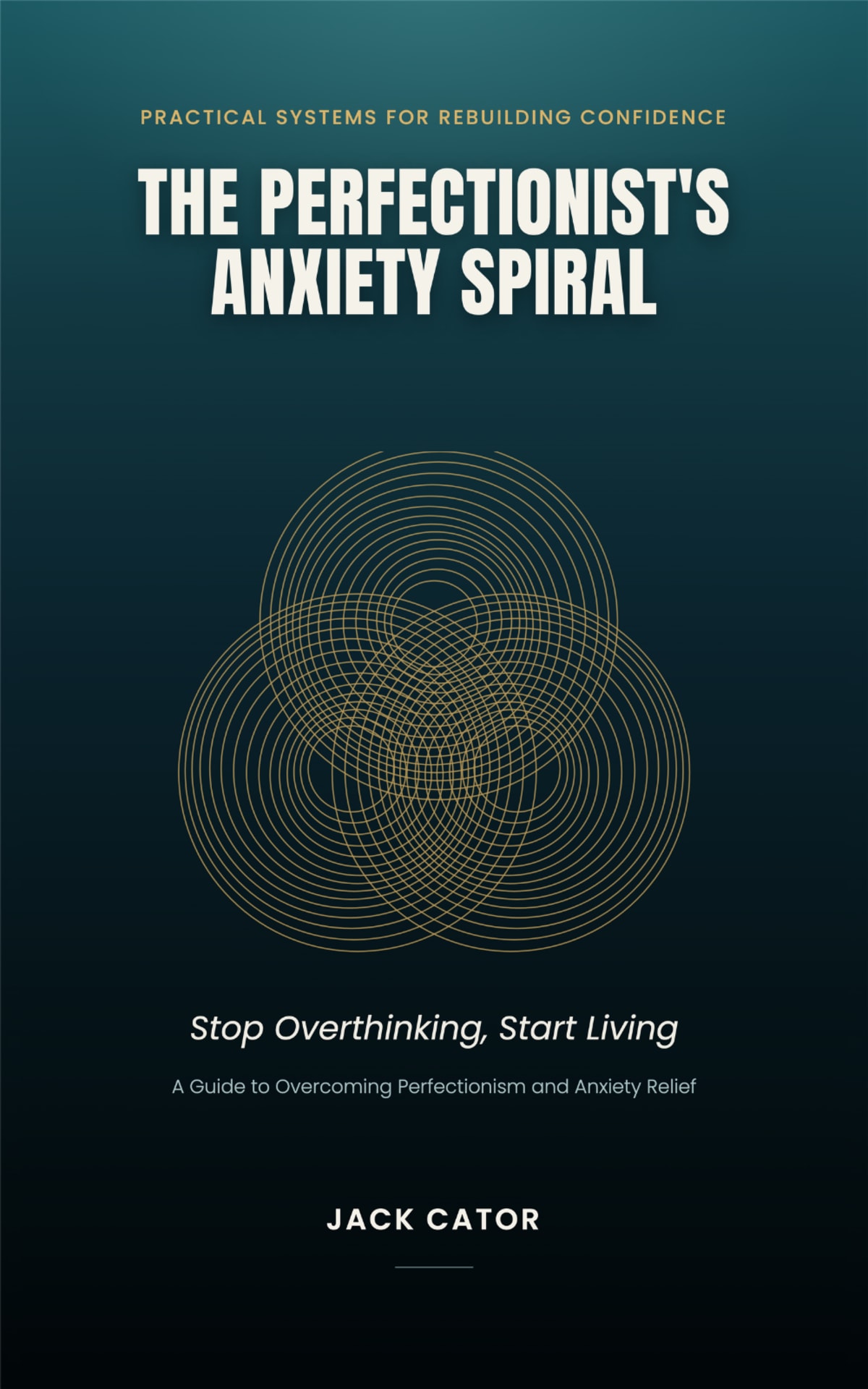
You’re a high achiever. A professional, a creative, someone who consistently aims for excellence. On the outside, you’ve got it together—hitting targets, excelling in your field, perhaps even inspiring others. But inside? It’s a different story. A relentless internal monologue, a constant feeling of “never good enough,” and a looming dread that, despite all your efforts, something will inevitably fall apart. You’re caught in the insidious loop of the perfectionist anxiety spiral, and it’s exhausting.
This isn’t about lacking ambition or wanting to lower your standards. It’s about the hidden cost of those relentless standards: the cycles of overthinking, over-checking, procrastination fueled by fear, and the pervasive anxiety that steals your peace. You’re looking for real solutions, practical strategies that cut through the noise and help you reclaim your life. You’re ready to stop merely surviving your achievements and start truly living.
This article, drawing from insights rooted in Cognitive Behavioral Therapy (CBT) and Acceptance and Commitment Therapy (ACT) research, offers a candid look at this spiral and provides actionable, real-world tools to help you break free.
The Hidden Trap of Perfectionism and Anxiety
For many high achievers, perfectionism begins as a driving force, a commitment to quality and success. However, it often morphs into something far more detrimental: a constant fear of failure and an insatiable need for external validation. This isn’t healthy striving; it’s a trap.
The Silent Struggle: Looking Fine, Feeling Frazzled
You appear composed, competent, and in control. But beneath the polished exterior, your mind is a battlefield. You replay conversations, second-guess decisions, and obsess over potential mistakes. This internal struggle, what we call the silent suffering, is a common experience for high-achieving perfectionists. It’s the paradox of looking fine while feeling utterly frazzled. As one expert notes, “Many clients come to therapy saying, ‘I just can’t shut my mind off.’ The truth is, overthinking often feels like control—but it actually creates more chaos” (Source 4). This constant mental analysis, often focused on “what ifs” and “should haves,” keeps your nervous system on high alert, contributing to chronic anxiety (Source 19).
From High Standards to Harsh Self-Criticism
There’s a crucial distinction between healthy striving and maladaptive perfectionism. Healthy striving is about growth, learning, and doing your best. Perfectionism, however, is often characterized by “all-or-nothing thinking,” viewing anything less than perfect as a complete failure, and engaging in “constant self-criticism” (Source 8). This harsh inner critic is the relentless taskmaster that makes “good enough” feel like a moral failing. Research suggests that while high achievers believe their perfectionist tendencies are key to success, perfectionists often don’t perform better than non-perfectionists in the workplace, yet they suffer significantly more (Source 8). This intense self-scrutiny leads to increased stress, anxiety, and even burnout (Source 8, 10).
The Overthinking-Procrastination Loop
Ironically, the pursuit of perfection often leads to its antithesis: procrastination. When the pressure to achieve an impossibly high standard is overwhelming, the fear of not meeting it can lead to paralysis. You might endlessly research, plan, or revise, convinced you need “just a little more time” to make it flawless. But this over-analysis prevents action, creating a vicious cycle. “Overthinking often leads to paralysis by analysis, where you spend more time worrying than taking action” (Source 2). The task feels too big, the potential for flaw too great, so you delay, compounding the anxiety and guilt. This perfectionism-procrastination dynamic not only hinders progress but also drains your mental energy (Source 11).
Why Gritting Your Teeth Doesn’t Stop the Cycle
You’ve tried to push through. You’ve told yourself to “just do it,” to “be tougher,” or to “think harder.” Yet, the cycle persists. This approach, though common among high achievers, often exacerbates the problem, leaving you more depleted and anxious.
The Illusion of Control: Analyzing Without Action
Overthinking often creates a false sense of control. By dissecting every possible outcome, every past mistake, and every future uncertainty, you might feel like you’re preparing, preventing disaster. However, this rumination rarely leads to genuine solutions. Instead, it keeps your brain “stuck in a loop of worry” (Source 2, 15). The truth is, “overthinking is a mental loop where your thoughts replay problems without progress” (Source 4). While valuable reflection helps you learn, rumination keeps you stuck, exhausting your mental resources without moving you forward.
Burnout is Not a Badge of Honor
The relentless drive for perfection, coupled with chronic overthinking, is a direct path to burnout. You push yourself harder and harder, sacrificing sleep, relationships, and well-being, believing that “more effort” is the answer. But burnout isn’t a badge of honor; it’s a cry for help from your system. Research shows that perfectionism messes with your stress response system, “flooding us with cortisol… and keeping our body’s alarm system permanently switched on” (Source 10). This sustained state of stress manifests physically (migraines, stomach issues, exhaustion) and mentally (decreased focus, irritability, depression), significantly impacting your quality of life (Source 10, 16, 19).
The Cost of “Never Good Enough”
The “never good enough” mindset is perhaps the most painful byproduct of the perfectionist anxiety spiral. Despite accomplishments, promotions, or glowing feedback, the internal critic always finds a flaw, a reason to feel dissatisfied. This constant internal battle “can steal the joy from experiences” and leave you feeling unfulfilled (Source 11). This deep-seated fear of not being enough often stems from early experiences, where inconsistent attention or validation linked self-worth to achievement, leading to a lifelong quest for external approval (Source 10). Breaking this cycle means challenging the belief that your worth is tied solely to your output.
The 8-Move Framework for Mid-Spiral Reset
Breaking free isn’t about magically stopping all overthinking. It’s about having a practical framework, a series of deliberate moves, to interrupt the spiral in the moment and redirect your energy. This 8-move framework, explored in detail in “The Perfectionist’s Anxiety Spiral,” is your toolkit for an immediate reset.
Notice: Catching the Cycle Early
The first step is simply awareness. Before you can change a pattern, you need to recognize it. Notice when your thoughts start racing, when the self-criticism ramps up, or when procrastination takes hold. Is your jaw clenched? Shoulders tense? Are you re-reading that email for the tenth time? “Recognize when your thoughts have slipped into a worry loop or been triggered by specific trigger thoughts” (Source 19). This self-awareness, labeling the thought loop for what it is, helps you “step outside the cycle and see it for what it is—a thought, not a fact” (Source 4, 19).
Pause: Creating Space for Choice
Once you notice, create a conscious pause. This isn’t about stopping the thoughts, but about interrupting the automatic reaction to them. This might be a physical pause—standing up, taking a sip of water, or simply a mental breath. This brief moment creates a vital space between the trigger and your response, allowing you to choose how to proceed rather than being swept away by the spiral.
Shift: Changing Your Internal Narrative
The perfectionist narrative is often one of catastrophic outcomes and personal inadequacy. The “Shift” move involves challenging these automatic negative thoughts (ANTs). Ask yourself: “Is this really true? What’s the evidence? What’s an alternative, more balanced perspective?” This is a core tenet of CBT (Source 1, 2). Instead of “If this isn’t perfect, I’ll fail catastrophically,” try “I’m doing my best, and even if it’s not perfect, I’ll learn from it.” Reframing your thoughts can “help reduce anxiety and shift your mindset to one that is more balanced and constructive” (Source 2).
Decide: Aligning with Your Values
When caught in the spiral, decisions feel monumental. The “Decide” move anchors you in your core values. Instead of asking “What’s the perfect decision?” ask “What decision aligns best with what truly matters to me?” Is it integrity? Connection? Growth? Contribution? Knowing your values acts as a compass, guiding you toward meaningful action even when uncertainty looms. This values-based decision-making, central to ACT, helps you prioritize and make choices that resonate deeply, reducing the need for “perfect” outcomes (Source 16).
Act: Taking Imperfect, Intentional Steps
“Action Breaks the Trap” (Source 4). The “Act” move is about taking one small, imperfect step aligned with your values. It doesn’t have to be perfect; it just has to be forward. This counters analysis paralysis and signals to your brain that the problem is being handled (Source 19). For a perfectionist, this might feel counter-intuitive, but “taking one small, low-stakes action or decision immediately disrupts the loop” (Source 4). This move is about progress over perfection.
Reflect: Learning from Every Outcome
Instead of dwelling on flaws, “Reflect” on what you learned from your imperfect action. Did it move you closer to your goal? What could be adjusted next time? This fosters a growth mindset, viewing challenges as opportunities for learning rather than proof of failure (Source 8). This reflection is a gentle inquiry, not a self-flagellation.
Repair: Practicing Self-Compassion
This is where you mend the internal wounds. Perfectionists are often their own harshest critics. The “Repair” move is about treating yourself with the same kindness and understanding you would offer a good friend (Source 2, 12). Acknowledge the struggle, offer words of encouragement, and remind yourself that imperfection is a universal human experience. “Practicing self-compassion can help reduce self-doubt and break the habit of overthinking” (Source 2).
Sustain: Building New Habits for Lasting Peace
The final move is about integrating these micro-resets into lasting habits. “Sustain” involves consistent, intentional practice of these moves. It’s not a one-time fix but an ongoing commitment to cultivating a healthier relationship with achievement. This consistency builds resilience, allowing you to navigate future spirals with greater ease and confidence.
Practical In-the-Moment Tools: From Deep Breathing to Action
While the 8-move framework provides a strategic pathway, sometimes you need immediate, tactical relief. These tools are designed for those moments when the spiral is gripping you tightly.
The 60-Second Deep Breathing Reset
When anxiety spikes, your breathing becomes shallow and rapid, signaling danger to your brain. A quick breathing reset can immediately calm your nervous system. Try the 4-7-8 technique: “Inhale deeply for 4 seconds, filling your lungs completely. Hold your breath gently for 7 seconds, letting your heart rate slow. Exhale slowly and fully for 8 seconds, releasing tension” (Source 19). Repeat this cycle 3-4 times. This simple exercise activates your body’s relaxation response, grounding you in the present and reducing stress hormones (Source 15, 16, 19).
Challenging “All-or-Nothing” Thoughts (CBT Basics)
Perfectionists often fall into the trap of “all-or-nothing” or “black-and-white” thinking. If it’s not perfect, it’s a complete failure. If you’re not the best, you’re the worst. This cognitive distortion fuels anxiety. When you catch yourself thinking in these extremes, challenge it.
Ask:
- “Is there a middle ground?”
- “What’s ‘good enough’ here?”
- “What would I tell a friend in this situation?”
This is a core technique from CBT, helping you “recognize unhelpful thought patterns and replace them with more balanced perspectives” (Source 1, 16).
Send the Email (or Submit the Draft): Action Over Analysis
How many times have you proofread that email, re-edited that report, or tweaked that design “just one more time”? This over-checking is a hallmark of the perfectionist spiral and a major source of procrastination. The practical tool here is simple: set a deadline, take a deep breath, and send it. Embrace the concept of “good enough.” The slight imperfection you’re agonizing over is likely invisible to others, and the cost of delay (time, energy, opportunity) far outweighs the benefit of marginal improvement. “Taking one small, low-stakes action or decision immediately disrupts the loop” (Source 4).
Harnessing “Worry Time” for Mental Clarity
Instead of letting worries consume your entire day, carve out a specific “worry time.” “Set aside 30 minutes for ‘worry time.’ During this time, allow yourself to acknowledge your worries, write them down, and reflect on possible solutions” (Source 1, 15). Once the time is up, consciously table those thoughts until your next designated worry session. This structured approach helps contain overthinking, preventing it from spiraling out of control and allowing you to reclaim your focus for the rest of the day (Source 4, 16).
Reclaiming Your Peace: How to Start Living Without Guilt
Breaking the perfectionist anxiety spiral isn’t just about managing symptoms; it’s about fundamentally shifting your relationship with achievement and self-worth. It’s about creating a life where you thrive, not just strive.
Embracing “Good Enough” and Growth Mindset
The mantra of “good enough” is often anathema to a perfectionist, yet it’s a cornerstone of sustainable success and mental well-being. Embracing “good enough” doesn’t mean lowering your standards; it means recognizing diminishing returns, prioritizing impact over flawlessness, and understanding that “perfect” is often the enemy of “good” (Source 8, 11). Coupled with a growth mindset—the belief that abilities can be developed through dedication and hard work—you begin to view challenges as opportunities for learning, not as threats to your self-worth (Source 8). This shift liberates you from the fear of failure and opens doors to genuine growth.
Setting Boundaries and Saying “No”
Perfectionists often overcommit, driven by a need to prove themselves or a fear of disappointing others. Learning to set clear boundaries—personal, professional, and digital (limiting information overload)—is crucial. This includes saying “no” to commitments that don’t align with your values or capacity, and protecting your time for rest and self-care. Boundaries aren’t a sign of weakness; they’re an act of self-preservation that empowers you to focus your energy where it truly matters, preventing overwhelm and burnout (Source 15, 16).
Cultivating Self-Compassion and Resilience
Ultimately, reclaiming your peace means cultivating profound self-compassion. This isn’t self-indulgence; it’s a radical act of kindness toward yourself. It means treating yourself with the warmth, understanding, and acceptance you would offer a loved one. When setbacks occur, instead of harsh self-criticism, offer yourself encouragement. Recognize your shared humanity—everyone struggles, everyone makes mistakes (Source 2, 6, 12). Self-compassion is a powerful antidote to anxiety and a key ingredient for building lasting psychological resilience, allowing you to weather life’s storms without being swept back into the spiral (Source 8, 16).
Ready to Break Free? Your Guide to a Calmer, More Fulfilling Life
You’ve built your success on dedication and drive, but that same drive has often come at a heavy cost: your peace of mind. The constant grind of overthinking, the paralyzing fear of imperfection, and the anxiety of never feeling quite good enough don’t have to define your journey any longer. Imagine navigating challenges with clarity, making decisions with confidence, and enjoying your achievements without the gnawing guilt.
This transformation is within reach. It’s not about changing who you are, but about equipping you with the tools to manage your brilliant, complex mind.
Discover “The Perfectionist’s Anxiety Spiral: Stop Overthinking, Start Living”
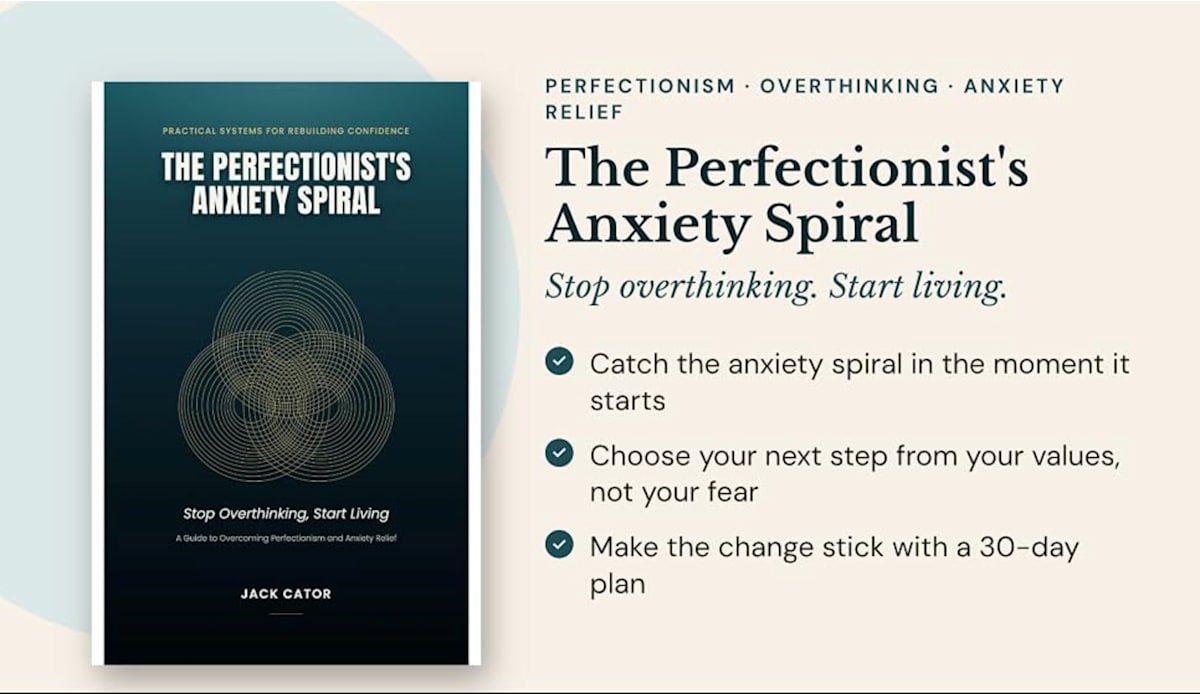
If you’re ready to move beyond abstract theories and dive into actionable, real-world strategies designed specifically for high achievers like you, then my book, “The Perfectionist’s Anxiety Spiral: Stop Overthinking, Start Living. A Guide to Overcoming Perfectionism and Anxiety Relief,” is your essential guide.
What You’ll Find Inside: Your Action Plan for Relief
This isn’t just another self-help book. It’s a comprehensive, empathetic, and highly practical roadmap to reclaiming your mental wellness.
Inside, you’ll discover:
- A Proven 30-Day Plan: A step-by-step program to integrate the 8-move framework and other powerful techniques into your daily life, making lasting change accessible and sustainable.
- Quick-Reference Cards: Instant access to key strategies for mid-spiral resets, perfect for those moments when you need immediate relief.
- Practical Scripts: Exactly what to say to yourself (and sometimes to others) to challenge negative thoughts, set boundaries, and cultivate self-compassion.
- Real-World Application: Grounded in research from CBT and ACT, but presented in a way that’s immediately applicable to your busy, high-stakes life.
Stop letting perfectionism and overthinking steal your joy and peace. It’s time to transform your relationship with achievement, embrace your inherent worth, and finally start living the fulfilling life you’ve worked so hard for.
Available now on Amazon in the US, UK, and Canada.
Keep reading
- Signs Your Perfectionism Is Hurting You
- Perfectionism Paralysis: Why You're Not Lazy
- Embrace Imperfection: why it builds confidence
- Books to Stop Overthinking: What Actually Works
You aren't broken. You're rebuilding. Pick one book, read one chapter this week, and do one exercise. That's how the spiral starts to unwind.

Perfectionism and Anxiety: How to Quiet Your Brain